
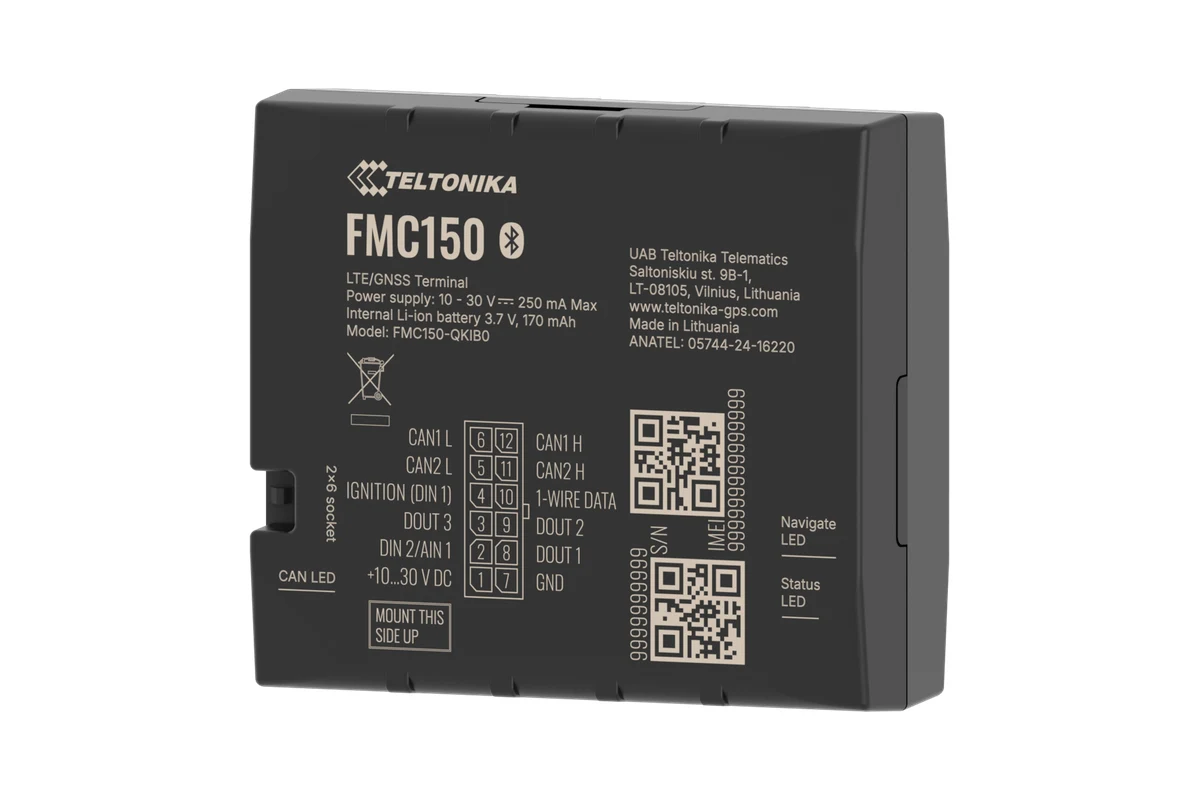
FMC150 is a GPS unit with a built-in CAN bus reader. It doesn't estimate – it takes data straight from the vehicle's control units: fuel level, total fuel used, the real odometer reading, RPM and accelerator pedal position. Two devices in one body, no external CAN adapter, for cars, EVs, vans, trucks and buses.
The device stays ours for 24 months and you use it. After two years you buy it for €1 excl. VAT — 12 paid months of service are enough.
An ordinary GPS unit knows where the vehicle is and how fast it is moving. To get data from the vehicle it needs a separate CAN adapter, extra wiring and one more thing that can fail. FMC150 has a CAN processor built in and two CAN interfaces – it connects to the vehicle bus and reads it as a silent listener.
It sends nothing to the control units and changes nothing in them. The vehicle drives exactly as before – you just finally see what is going on inside. How the CAN bus works is explained in CAN bus and reading vehicle data.
Fuel level – the same value the driver sees on the dashboard. Total fuel used – how many litres the engine really burned. Distance driven – the real odometer reading from the vehicle, not a sum of GPS points. Wheel-based speed, engine RPM and accelerator pedal position.
That is the basis for everything that costs a fleet money: real consumption per 100 km for each vehicle, trip log mileage matching the odometer, servicing by real kilometres, idling with the engine running and driving style. The data available depends on the vehicle model – Teltonika keeps a list of supported vehicles and we check it for your vehicles before fitting.
FMC150 supports passenger cars and light commercial vehicles, electric vehicles, trucks and buses. It runs on 10–30 V with overvoltage protection, so the same unit fits a 12 V van and a 24 V tractor unit.
On electric vehicles the CAN module reads data that OBD units often cannot get. One unit covers a mixed fleet – no different hardware for every vehicle type.
The body measures 65 × 56.6 × 20.6 mm and weighs 55 g, with GNSS and LTE antennas inside. The unit is wired to the vehicle's power and to the CAN wires behind the dashboard and stays hidden – there is nothing to find or pull out. Unlike the FMC003 OBD unit, which the driver sees under the steering wheel, FMC150 is a permanent installation.
The 170 mAh backup battery reports a power disconnection and keeps sending the position for a while. The accelerometer detects crashes, towing of a parked vehicle and signal jamming. Fitting is done by a technician, usually within an hour.
Connection over 4G LTE Cat 1 with 2G fallback, position from GPS, GLONASS, Galileo, BeiDou and QZSS with accuracy under 2.5 m. 128 MB of memory keeps records where there is no signal and sends them once the network is back.
Plus three digital inputs, two analogue inputs, two outputs, 1-Wire and Bluetooth 4.0 LE. Add a driver ID beacon, an iButton reader, a temperature sensor or an immobiliser via an output.
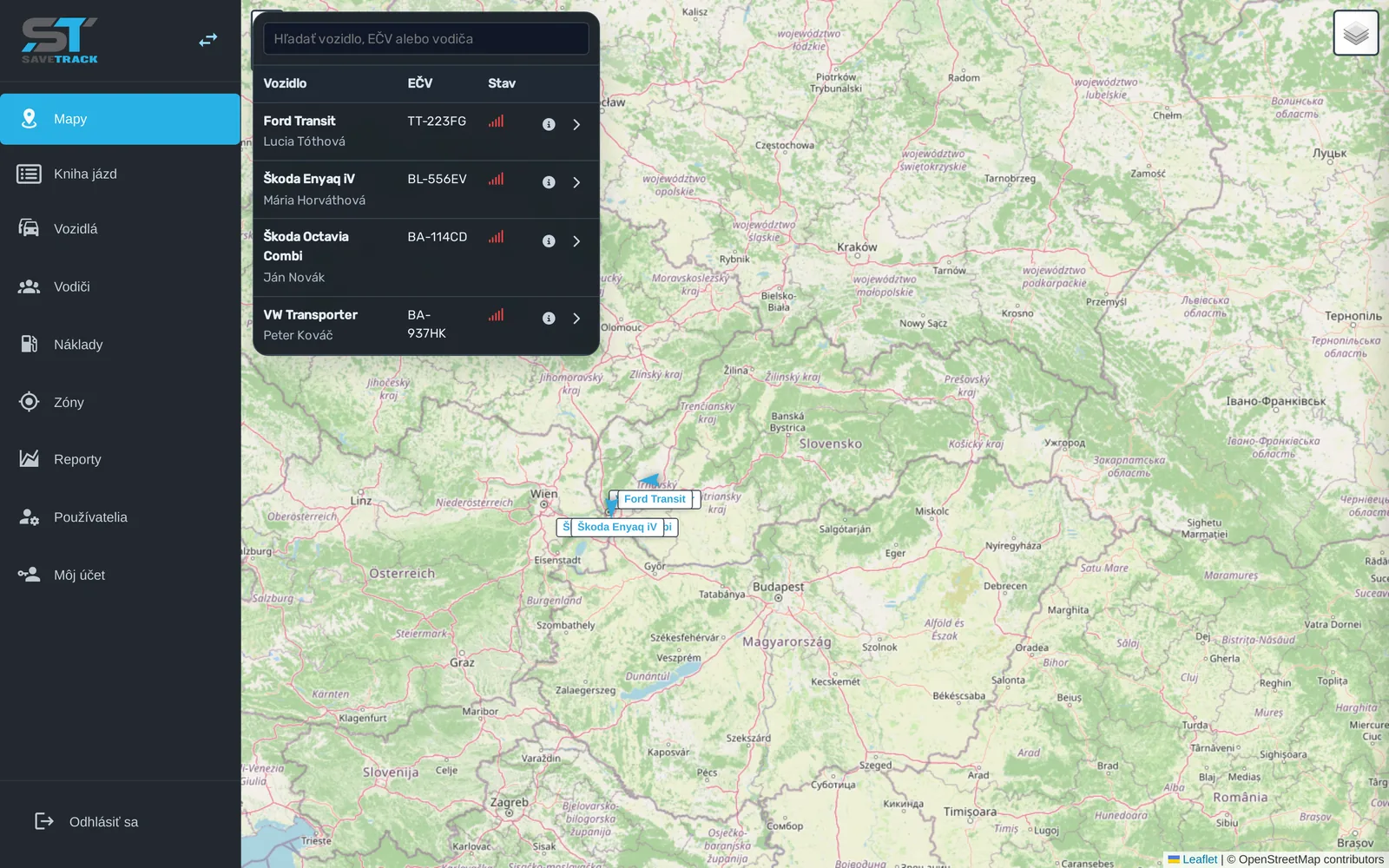
Trip log, real-time location, zones, alerts, driving style and PDF and Excel export are included in the service. We keep the data encrypted and you can access it from your computer or phone.
With monthly payment FMC150 costs a one-off 95 € excl. VAT and the service 3.80 €/month with no commitment. With annual payment you only pay the difference against the device included in the package, and the loyalty price drops from 5.80 € to 3.80 €.
It connects to the vehicle's CAN bus, where control units exchange data, and reads fuel level, consumption, odometer, RPM, speed and accelerator pedal position from it. It sends nothing – it only listens.
FMC003 plugs into the OBD socket in seconds, but it is visible and can be pulled out. FMC150 is fitted out of sight and permanently, reads CAN from trucks and buses too, and has inputs and outputs for an immobiliser or iButton.
The CAN data available depends on make, model and year. Send us the make, model and year and we will check it against Teltonika's supported vehicle list before you order.
The unit only reads the CAN bus and sends nothing to the control units. A technician fits it without cutting the original wiring, so it can be removed at any time without a trace.
With monthly payment the unit is a one-off 95 € excl. VAT and the service is 3.80 €/month with no commitment. With annual payment you only pay the difference against the device included in the package.
You simply plug the Teltonika FMC003 OBD GPS tracker into the OBD-II diagnostic connector and your vehicle is...
Learn moreThe FTC880 connects by cable straight to the battery terminals – no cutting into the loom. The IP69K housing s...
Learn moreThe FMC130 is wired permanently into the vehicle supply and hidden behind the trim – there is nothing to spot...
Learn moreGPS monitoring from 5.80 €/month, GPS device included with annual payment. The price drops every year down to €4.
Order with no obligation